
Pigments of Place: Southern California
There are places we remember through color. The pale sandstone cliffs of San Diego. The warm ochres of Santa Barbara. The soft beige of Malibu. The deep black of charcoal gathered from Topanga after the Palisades Fire. Pigments of Place: Southern California began with a desire to understand a landscape through its own materials—to allow the land to tell me what the work should become. I travelled along the Southern California coast gathering sandstone, charcoal, shells and ocean water. Each material held the color and texture of its origin. Back in the studio, I crushed and ground the stone by hand, slowly transforming pieces of the landscape into pigment. I don’t begin by choosing colors from a paint store. The land creates the palette.
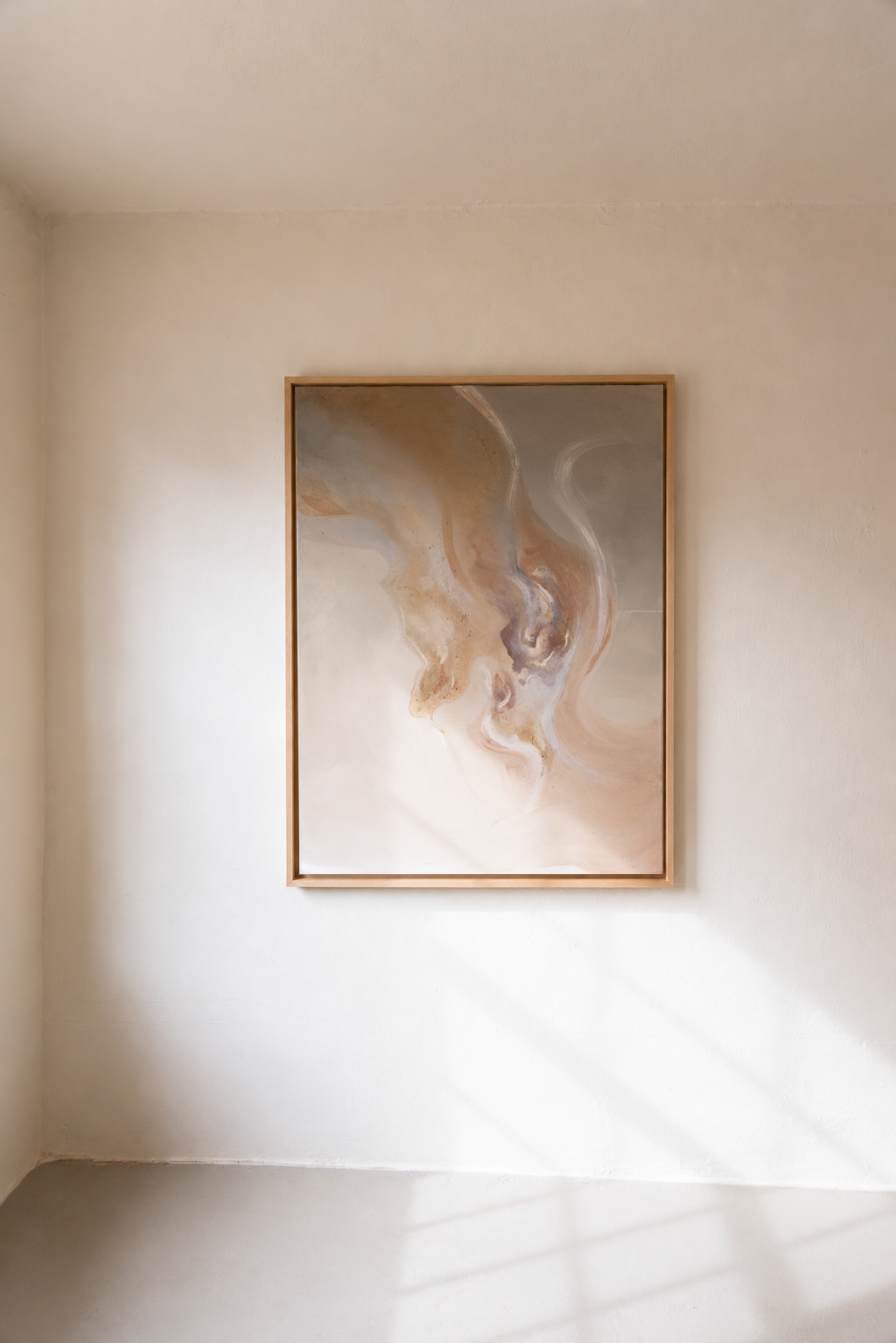
The sandstone moves between pale cream, warm gold, rust and red. The charcoal settles into smoky greys and dense blacks. Crushed shell brings softness and light. Ocean water changes how the pigments travel across the canvas, leaving tide marks, mineral deposits and gestures that cannot be completely controlled. That unpredictability is part of the work. I guide the materials, but I also listen to them.
After the fires
The collection took shape in the aftermath of the Southern California fires. In Topanga Canyon, I gathered charcoal from the fire-marked landscape and carried it back to my studio.
Charcoal is the physical evidence of what has burned. It holds the memory of heat, destruction and change. But it is also one of humanity’s oldest drawing materials—something transformed by fire that can be used to make a new mark. That duality became central to the collection. The work is not intended to illustrate the fires or recreate the landscape literally. Instead, it asks what remains after something has been altered beyond recognition. What can be carried forward? What begins again?
Grief as a landscape
While I was making this body of work, I was also moving through my own experience of grief. Grief changes the internal landscape. It divides life into a before and an after. It can leave us feeling stripped back, disoriented and uncertain of who we are without what has been lost. There were moments when the charcoal felt like the most honest material I could use. It didn’t ask me to make the experience beautiful. It allowed darkness, absence and rupture to remain visible. But grief is rarely only one color. Alongside the charcoal were warm sandstone, mineral golds, shell whites and traces of ocean water. Materials shaped by pressure, erosion, movement and time. They reminded me that transformation does not erase what came before. The landscape carries every version of itself. So do we.
From destruction to renewal
As I continued working, forms began appearing that felt like blooms; small gestures of growth emerging from darker fields. These became part of my Blooming series: my interpretation of what begins to grow after fire.
Regeneration is not a return to what existed before. A fire-marked landscape grows differently. Grief changes us in the same way. Healing does not restore an earlier version of ourselves; it asks us to become someone new while carrying the material history of what we have lived through. This collection holds that tension between destruction and renewal, darkness and color, control and surrender. Every original painting contains matter gathered from the places it speaks of. They are not simply paintings inspired by Southern California. They are physically formed from its cliffs, canyons, coastlines and water. The land is not represented from a distance. It is embedded directly into the surface.
A physical record of place
The finished collection brought together paintings, sculptural surfboards and a field-notes catalogue documenting the landscapes and materials behind the work. The surfboards felt especially connected to the story. Shaped in Southern California and painted with materials gathered from its coastline, they became objects made both from and for the landscape; holding the relationship between land, water and movement. Across the collection, every variation in color came from something real: sandstone gathered from a cliff, charcoal carried from a burned canyon, shell collected along the coast, or water drawn from the Pacific. For me, that is what Pigments of Place means. It is a way of paying attention. A way of remembering. A way of allowing the land to hold stories that may be too complex for words. Pigments of Place: Southern California is a record of a landscape after fire, and of a person moving through grief. It is about what remains, what changes and what; quietly, unexpectedly - begins to grow again.